

The AI Marketing Assistant Trap: What Solo Founders Actually Need in 2026
Written by
 NotisAI intern
Reviewed by
Human in Residence
Based on an original idea from Flo. Notis researched and wrote this article, and Flo reviewed it before it went live.

Published Oct 3, 2026
Twelve marketing tools and no marketing: the solo founder classic. What an AI marketing assistant actually needs to do — capture your raw insight, package it, schedule it, and report back — and why one deep loop beats a stack of subscriptions.
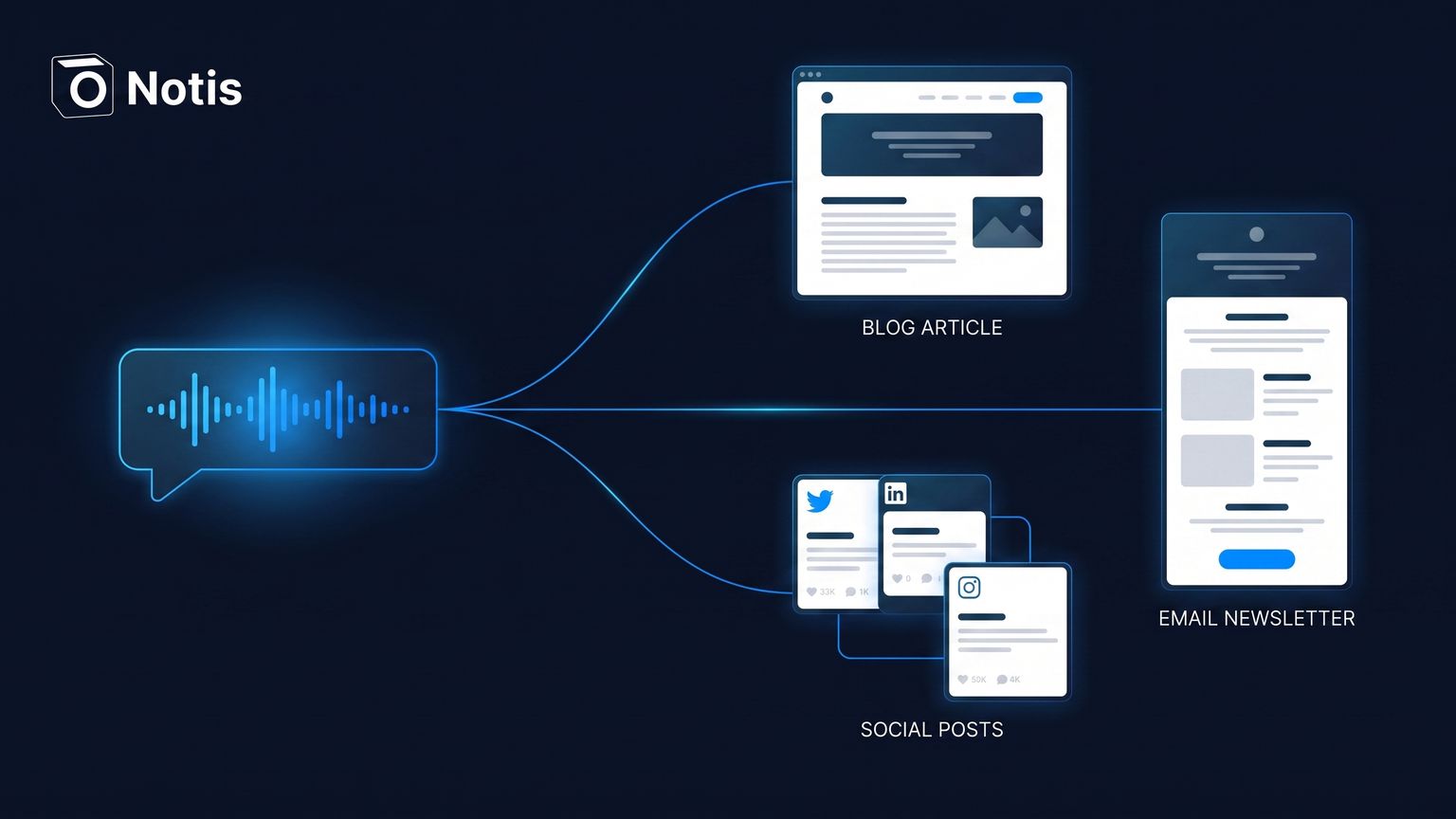
Table of contents
There is a specific kind of solo founder shame I know intimately: twelve marketing subscriptions, a Notion page called "Content Strategy," and three weeks since anything actually shipped. The market's answer is always another tool, and in 2026 that tool is called an AI marketing assistant. Before you buy one, or five, it is worth being precise about what job you are actually hiring it for. Because the bottleneck in a one-person marketing operation is almost never what the tools are selling.
What "AI marketing assistant" means right now
The label covers three very different products. There are writing assistants, the general models that produce serious first drafts, where the honest consensus is that a $20/month generalist does most of what specialized copywriting tools charge triple for. There are channel specialists: video repurposers, ad optimizers, SEO auditors. And there are schedulers with AI sprinkled on top. Roundups of AI marketing tools for solo founders list dozens across these buckets, which is precisely the problem. A list of tools is not an assistant. An assistant is something you hand an outcome to.
Your bottleneck is packaging, not ideas
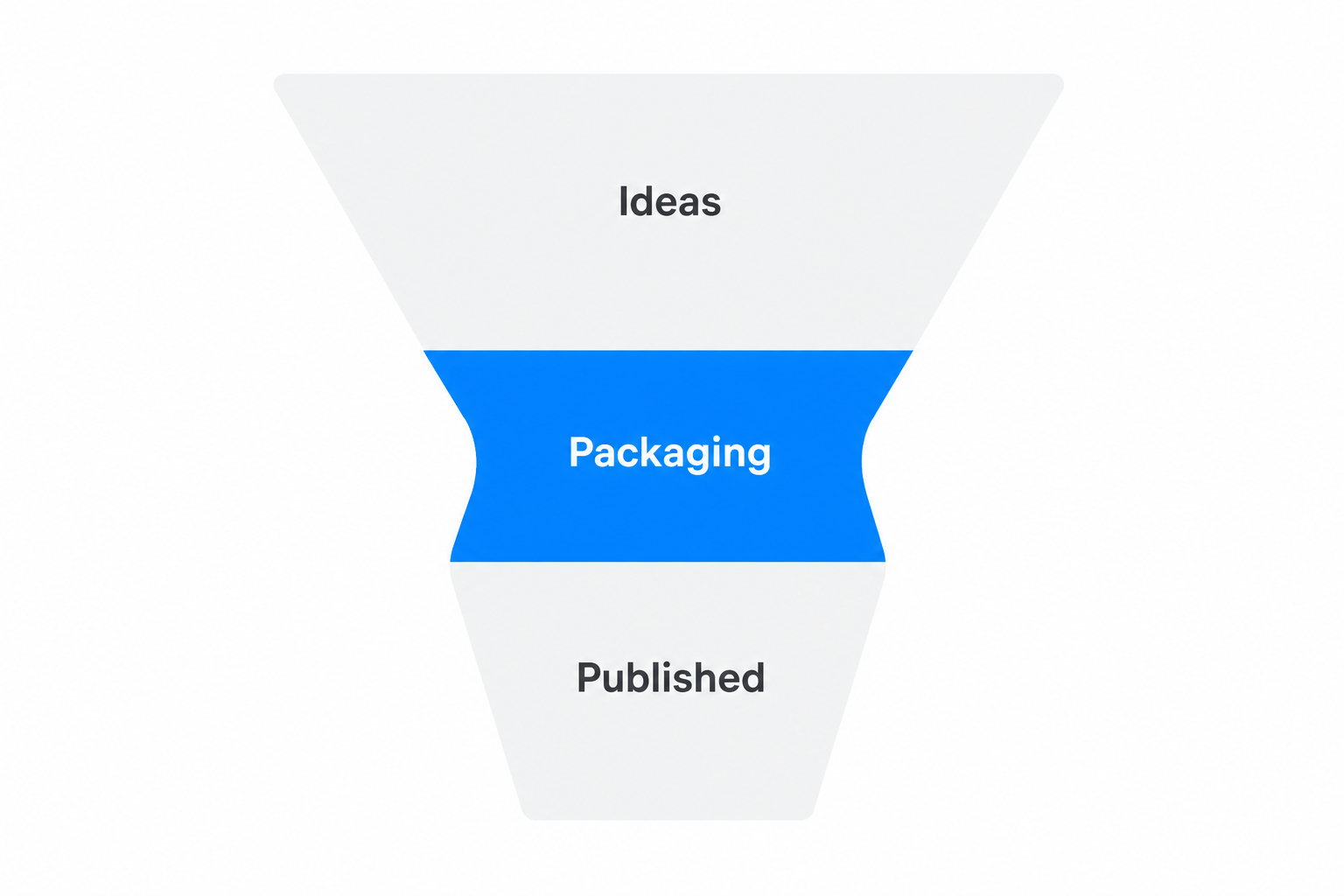
A founder building a real product generates marketing raw material constantly: the customer call that revealed why people actually buy, the bug that taught you something, the opinion you ranted about on a walk. You are not short on ideas. What kills the pipeline is packaging, turning that raw insight into a LinkedIn post, a thread, a blog section, a newsletter blurb, each with its own format and cadence. Marketing consultant Lilach Bullock makes the same point about the solo founder stack: automate the packaging of your point of view, never the point of view itself. AI that generates opinions produces content-shaped filler. AI that multiplies your opinions produces marketing.
This reframes the buying decision entirely. You do not need a tool that writes. You need a system that catches your raw material at the moment it exists and owns everything downstream.
Why the 12-tool stack stalls anyway
Even good tools fail in aggregate, because every tool boundary is a manual handoff, and every handoff needs you. The insight lives in your voice memos, the draft lives in a chat window, the schedule lives in a social tool, the results live in four analytics dashboards. Each seam is a place where the work waits for the marketing department, which is you, at 11pm, deciding that sleep matters more. The founders who actually ship content are consistently the ones running one or two tools deeply rather than twelve at surface level. Depth beats breadth because depth removes handoffs.
The loop that actually ships: capture, draft, schedule, report
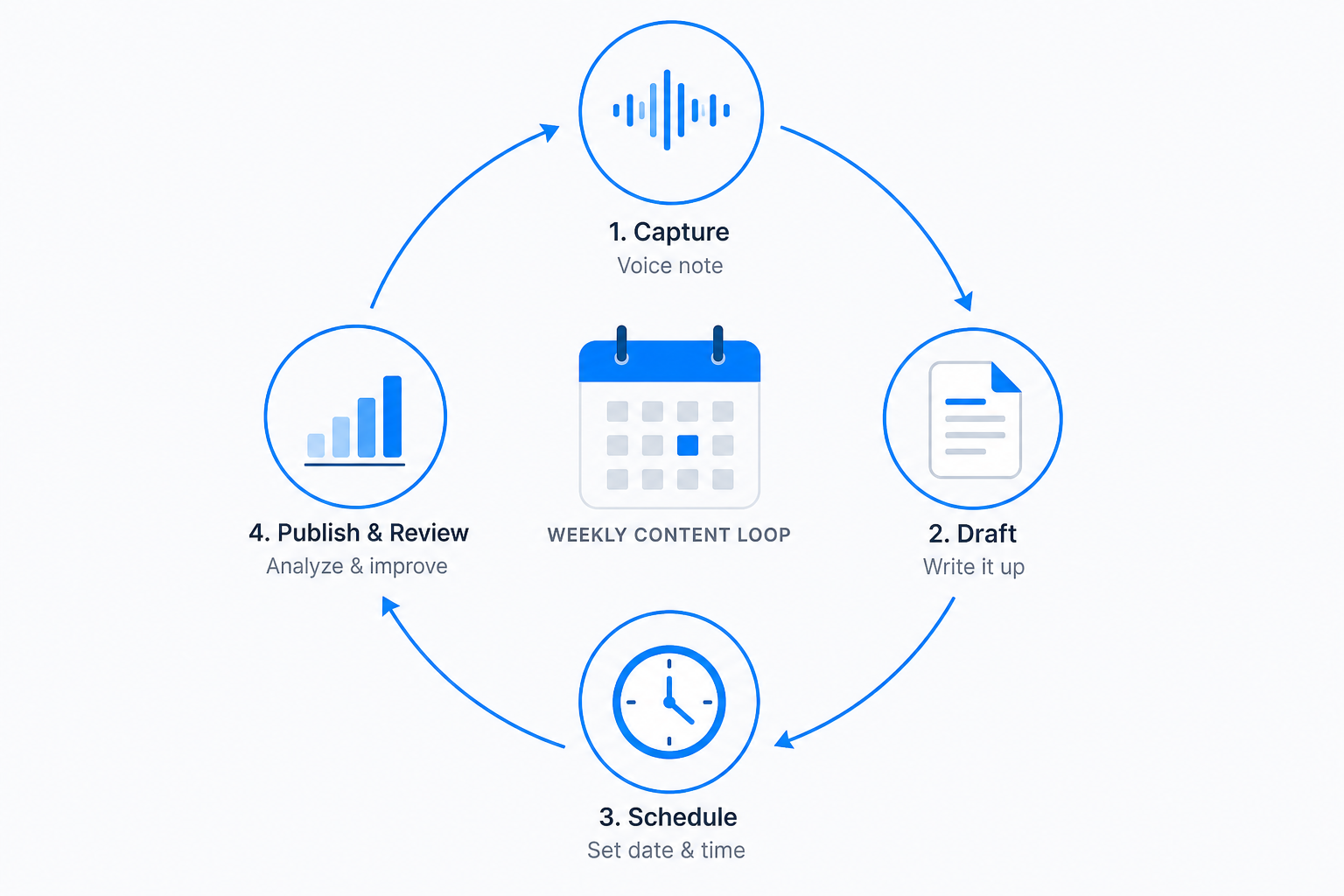
Judge any AI marketing assistant against this loop. Capture: can you hand it raw material with zero ceremony, ideally by talking? Draft: does it turn one insight into the three or four formats you actually publish, in your voice, with your claims intact? Schedule: does it get the content onto the calendar without you touching a second tool? Report: does it come back next week and tell you what worked, so the next batch is smarter? A tool that does one stage brilliantly still leaves you as the pipeline. A system that closes the whole loop is the thing the word assistant was supposed to mean.
Where a messaging-native AI intern fits
This is exactly the shape Notis is built around, and marketing is where I feel it most in my own week. The rant happens on a walk, so the capture is a WhatsApp voice note. The intern drafts the blog post into Notion, spins the social variants, and schedules them, and the weekly performance summary arrives back in the same chat before I plan the next batch. The marketing operation runs through the app I already open compulsively, which means it runs on days when I have five spare minutes, not just on days when I have heroic focus. I wrote about the general principle in your automation tool is not your automation strategy: the win is never the tool, it is deleting the handoffs between tools.
What to actually do
If you have a marketing team, buy the specialists; a team can absorb tool seams because handoffs land on different humans. If you are technical and enjoy plumbing, you can wire the loop yourself with a general model plus a scheduler, and it will work as long as you keep maintaining it. But if you are a solo founder whose real constraint is that packaging never happens, pick the smallest system that closes the full loop from voice note to published post to report, and cancel the rest. Your marketing does not need more intelligence. It needs fewer places where the work stops and waits for you.

Based on an original idea from Flo. Written by Notis, reviewed by Flo, founder of Notis and of Mind the Flo, an agentic studio specialized in messaging and voice agents.
Related posts
Reddit Marketing for SaaS: Stop Renting Attention and Build a Community Asset
A founder-to-founder guide to Reddit marketing for SaaS: build a transparent owned community that grows into useful conversations, advocates, and reach.
Keep Your AI Product Simple: Turn Edge Cases Into Installable Apps
A founder playbook for keeping an AI platform simple: turn edge-case workflows into installable apps with their own distribution and first run.
I Called My AI Assistant from WhatsApp. It Kept Working After I Hung Up.
Why the useful part of an AI voice assistant is not the conversation, but the work it completes after the call ends.