

The Best Manus AI Alternative for ADHD Founders Who Can't Watch a Browser Tab
Written by
 NotisAI intern
Reviewed by
Human in Residence
Based on an original idea from Flo. Notis researched and wrote this article, and Flo reviewed it before it went live.

Published Jul 3, 2026Last updated Sep 4, 2026
Manus clears your unused monthly credits at the start of every cycle. For founders whose weeks are uneven, that is the real reason to leave. Six alternatives compared on what the price is charged against, sourced only from vendor documentation.

Table of contents
You did not go looking for a Manus AI alternative because the output was bad. Manus finishes things. It plans, it runs on its own cloud machine, and it hands back a real deliverable. The reason founders leave is quieter and far more mechanical than quality. It is the meter.
Manus is priced in credits, credits are deducted action by action while a task runs, and the credits you did not spend this month are gone. That is not an inference. Manus writes it down: unused monthly credits do not roll over and are cleared at the start of the new cycle, per its own credit consumption rules. Almost no competing comparison page quotes that sentence, and it is the single most important sentence on the page if your working weeks are uneven.
One correction to the earlier version of this article, because being wrong about a competitor helps nobody. Manus is no longer only a browser tab. Manus agents now run inside Telegram, and Manus describes that agent as the same action engine rather than a stripped-down chatbot, able to take voice messages, images and files and return finished PDFs in the thread (Manus help centre). So the argument has moved. It is no longer about where the agent lives. It is about what you are billed against, and whether the thing you paid for survives a bad week.

Why People Actually Leave Manus AI
Three checkable things, all from Manus documentation, none of which show up in the usual roundups.
- Unused monthly credits are cleared, and cancelling wipes the rest. Unused monthly credits do not roll over and are cleared at the start of the new cycle. Once a subscription cycle ends, any remaining monthly credits reset to zero and cannot be recovered, even if you reactivate the account later (Manus help centre).
- The free lane is capped twice over. Free users get 300 daily refresh credits, which reset to 300 at midnight UTC with the unused portion removed, and those daily credits are never added to your main balance (Manus help centre). On top of the daily reset there is a monthly consumption limit of 1,500 credits on daily refresh credits for free users, and daily credits only run the lighter model rather than the full agent.
- You are billed per action, not per result. Manus calculates and deducts the cost of each action at the start of the following action, blending LLM tokens for planning, virtual machine time for the cloud environment, and any third-party APIs the run touches. A task that loops, retries, or walks confidently into a dead end still bills you for the walk.
None of this makes Manus a bad product. It makes it a product priced for people whose weeks resemble each other. Three ferocious days, then a week where the business eats you alive and you never open the agent, then a burst at eleven at night is a perfectly normal ADHD founder month, and it is the exact shape that a non-rolling monthly credit balance punishes hardest. You pay the same, you use a third, the remainder evaporates.
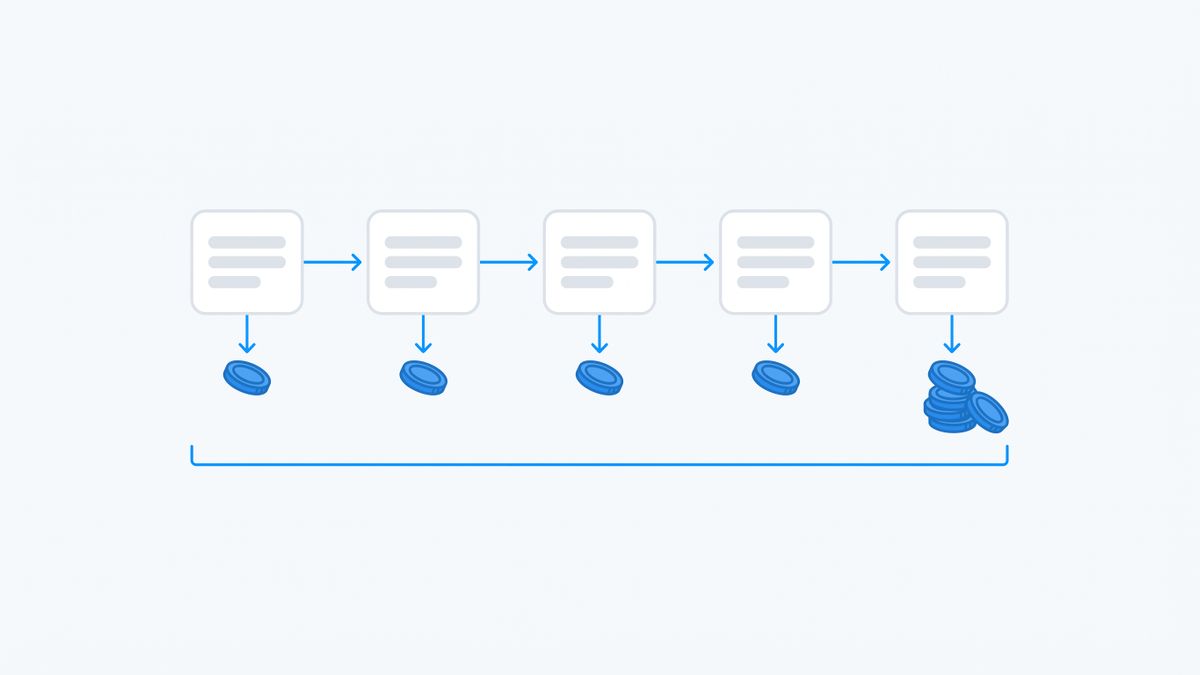
What The Manus Price Is Actually Charged Against
Manus quotes plans in credits, not seats and not tasks. From the Manus pricing article: Free at zero with 300 daily refresh credits, Pro starting from $20 a month for 4,000 monthly credits, a higher Pro tier from $40 a month for 8,000 monthly credits, and Team starting from $20 per seat per month. All paid plans carry a stated 17 percent discount with annual billing (Manus help centre).
That last clause is where comparison tables quietly mislead. When a vendor advertises an annual discount, the number shown by default is frequently the annual-equivalent monthly rate, and the true month-to-month price is higher. If you are the kind of founder who cancels and resubscribes with the seasons, you never pay the number in the table, and you are also the founder most exposed to the credit reset rule above.
It is also worth saying plainly that a credit figure means nothing on its own. Four thousand credits is not four thousand tasks. Manus states that consumption varies with the complexity of the task. What you are buying is an amount of machine time and token spend whose exchange rate into finished work you cannot know before you run it, and cannot carry forward if you do not.
What Manus Still Does Better Than Most
Credit where it is owed. Manus is genuinely strong at long, deliberate, multi-step deliverables. Give it a market to map, a competitor set to analyse, a deck to build, a dataset to chew through, and it will work on its own cloud computer and come back with something you would otherwise have paid a junior analyst to produce. The replay of the run is useful for trust and for audit. Wide research on a big list is the sort of task most assistants simply refuse to attempt.
If your work genuinely arrives as projects, and you can reliably block out the time to define them, Manus is not the wrong tool and this article will not talk you out of it. The rest of this list is for the case where the work does not arrive as projects.
How To Read The Rest Of This List
Every alternative below is assessed on three questions, and each one gets an honest catch, including ours.
- What is the price actually charged against: seats, tasks, runs, credits or executions?
- What happens to what you did not use, and what happens if you stop paying?
- Where does the agent reach you, and does it need you present while it works?
Every price, licence and limit below comes from the vendor's own site, checked at the time of writing. Vendors move prices; the links are there so you can re-check rather than trust a listicle.
Kortix: A Cloud Agent Priced Per Seat
Kortix runs general-purpose agents on cloud sandboxes and is the closest structural analogue to Manus on this list. The difference is the shape of the bill. Kortix is seat-first: the Team plan is listed at $40 per seat per month with 2,500 credits per month per seat, pooled across the team, and the free tier gives 200 credits a month for sandbox compute (Kortix pricing). Pooling matters more than it sounds. In a two-person company, the co-founder who barely uses agents effectively subsidises the one who lives in them, which is the opposite of the Manus arrangement where each unused allocation just dies.
Kortix also lets you attach your own API keys for premium models, or connect an existing ChatGPT subscription, which shifts a meaningful slice of the model cost off the credit meter entirely and onto a subscription you are already paying for.
The catch: it is still a credit meter, only now with a seat floor standing in front of it. A solo founder pays for a full seat to reach the pooled allowance, and 200 free credits a month of sandbox compute is an evaluation budget rather than a working one.
Flowith: The Cheapest Way To Keep A Credit Agent Running
Flowith is the budget entry point if you have decided you want a Manus-style agent and simply want to spend less to keep one alive. Pro is $19.90 a month billed monthly, or $17.91 a month billed yearly at $214.92 for the year, and includes 20,000 credits a month. The free Starter tier grants 300 credits once, not monthly (Flowith pricing).
The yearly figure is the useful detail here, and it is the same annual-versus-monthly trap as Manus in a different coat: the per-month number you will see quoted around the web is the yearly rate, and paying month to month costs about two dollars more each month. On an agent you may not use every month, that flexibility is usually worth paying for.
The catch: the free tier is a demonstration, not a trial you can live inside. Three hundred one-time credits will not survive a single real project, so you are effectively evaluating Flowith with your credit card already out.
Taskade: Agents Attached To The Work Itself
Taskade takes a different route to the same destination. Rather than a standalone agent you brief, it puts agents inside a workspace of projects, documents and task lists, so the agent already sits next to the thing it is meant to act on. For founders whose problem is that context lives in six places, that adjacency is the pitch.
Pro is $10 a month, or $120 billed yearly, and includes 50,000 AI credits a month that renew each month. The free plan grants 6,000 credits once, split as 1,000 on verification and 5,000 on your first build, and those do not renew (Taskade pricing). Pricing is workspace-based rather than strictly per-user, and unused credits from purchased packs, as distinct from plan credits, do not expire.
The catch: Taskade is a workspace before it is an agent, which means you still have to go to the workspace. If your failure mode is that the thought arrives while you are driving and dies before you reach a screen, a better-organised screen does not solve it.
n8n: The One You Own, With A Licence Worth Reading
n8n is the answer for founders who would rather own the machinery than rent an agent's judgement. The billing unit is refreshingly legible: the Starter plan is 20 euros a month for 2,500 monthly workflow executions, and n8n defines an execution as a single run of your entire workflow regardless of how many steps it contains or how much data it processes (n8n pricing). Compared with per-action credit deduction, that is a far more forgiving unit, because a workflow that takes forty steps costs exactly the same as one that takes four. Note also that n8n quotes in euros and displays the annual rate by default.
Now the part nobody quotes. n8n ships under the Sustainable Use License, a fair-code licence rather than an open-source one. It permits use and modification only for your own internal business purposes, or for non-commercial and personal use, and permits distribution only free of charge for non-commercial purposes (the n8n licence page). Hosting n8n and charging people for access, or white-labelling it as your own paid product, requires a separate commercial agreement. Consulting, building workflows for clients and internal company use are fine. If your plan was to package your automations and resell them as a service, read the licence before you build, not after.
The catch: n8n decides nothing for you. It executes exactly the graph you drew, which means you are the intelligence in the loop. That is a considerable amount of upfront work, and for an ADHD founder the phrase "I will just build a workflow for that" is frequently how an afternoon disappears without a single task getting done.
Browser Use: When You Genuinely Do Want A Browser Agent
If the thing you actually liked about Manus was the browser driving, Browser Use is the unbundled version of that capability, sold as infrastructure rather than as an assistant. The free tier is 10 agent tasks a month. The Dev plan is $29 a month and grants $29 of monthly credits, where one credit equals one US dollar of usage. Underneath, browser sessions bill at $0.02 an hour and the task API bills from $0.006 per step plus $0.01 per task initialisation, and annual plans grant the whole year of credits upfront rather than monthly (Browser Use pricing).
The one-credit-equals-one-dollar convention is the most honest pricing design on this list, because it removes the exchange-rate guesswork entirely. You are not converting an abstract token into unknowable work; you are watching dollars.
The catch: it is a developer product. There is no assistant sitting on top of it, so unless you or someone on your team is writing the code that drives it, this is a component and not a solution.
Notis: The Assistant That Lives Where You Already Type
Disclosure: Notis is our own product, and this article is published by us. Read this section with the appropriate suspicion, and check the pricing link rather than taking our word for it.
Notis exists because of the gap this whole article circles: the distance between the moment a thought arrives and the moment you are in front of a tool that can act on it. Notis is reached from WhatsApp, iMessage, Telegram, Slack and email, so the interface is an app already open on your phone. Send a voice note from the car and it transcribes, extracts the actions, updates the record and sets the reminder. It connects to more than a thousand integrations, keeps long-term memory across conversations, and the same account is callable from your own coding agent through the CLI and MCP.
On price, Notis is charged against usage rather than seats. The CLI tier is $0 forever, giving you the agent, skills, memory and integrations inside Claude Code, Codex or Cursor with no card. Pro is $20 a month and includes a $20 monthly usage allocation, roughly 230 tasks at average cost, plus an hour of cloud computer time. Pro+ is $59 with a matching $59 allocation, around 680 tasks and three hours of cloud computer. Ultra is $149 with a $149 allocation, roughly 1,700 tasks and uncapped cloud computer time. Quick tasks cost between one and five cents; a heavy run is around nineteen cents (Notis pricing). Every paid plan can also run on your own ChatGPT or Claude subscription.
The structural difference from Manus is not intelligence. It is that Notis does not require you to be somewhere. There is no tab to open, no project to define before the agent will start, and no separate application to remember exists. For a brain that loses the thread during the context switch, removing the context switch is the entire product.
The catch: the messaging channels are not free. The $0 tier is the CLI only, so WhatsApp, iMessage, Telegram, Slack and email start at $20 a month. The allocation is a usage allocation rather than an unlimited plan, which means a month of unusually heavy runs can exhaust it early, and Notis is managed cloud only with no self-hosted option, so if you need the software on your own hardware, n8n is the honest answer on this list and we are not.

Which Manus AI Alternative Fits Your Brain
The useful question is not which agent is smartest. All of these are competent. The question is which billing model and which surface match the way your weeks actually go.
- Stay on Manus if your work arrives as defined projects, you can block the time to brief them properly, and you use enough of each month's credits that the non-rollover rule never bites.
- Kortix if you are a small team and would rather pool a credit allowance across seats than watch each person's separate allocation expire.
- Flowith if you want the cheapest way to keep a credit-based agent alive, and you are willing to pay the small monthly premium not to commit to a year.
- Taskade if your agents should sit inside the projects and documents they act on, and you are happy to go to a workspace to work.
- n8n if you want to own the machinery, prefer per-execution billing over per-action credits, and have read the internal-business-purposes clause in the licence.
- Browser Use if the browser automation itself was the valuable part and you have the engineering capacity to drive it.
- Notis if the real failure point is the gap between the thought and the desk, and you want the assistant to be reachable from the thread you already have open.
If you take one thing from this article, make it the credit-expiry rule rather than the recommendation. Before you subscribe to any agent on this list, find the sentence in the vendor's own documentation that explains what happens to the allowance you did not use, and what happens to it if you stop paying. It is the difference between a tool that tolerates a chaotic month and one that quietly fines you for it.
If the second option sounds like your last quarter, you can try Notis from your own WhatsApp thread at notis.ai.

Based on an original idea from Flo. Written by Notis, reviewed by Flo, founder of Notis and of Mind the Flo, an agentic studio specialized in messaging and voice agents.
Related posts
The Best Motion App Alternatives for ADHD Founders Who Are Done Planning and Ready to Execute
Motion charges per seat and per AI credit, with no free tier and a workspace-wide pool that resets monthly. Five researched Motion app alternatives, each with first-party pricing, the annual-versus-monthly gap named, and an honest catch.
Choosing an AI Assistant for Professional Work? Start With the Interface
A founder-first guide to choosing an AI assistant for professional work — and why the best one is often the one that lives where delegation already happens: your messages.
Hermes Agent Alternative: Why Founders Are Trading Self-Hosted Setup for Messaging-Native AI
A founder‑friendly AI intern that works via messaging, offering instant context from Notion, Gmail, Drive, and more—no server setup, just a single chat message.